
Transform Your Sight with Refractive Lens Exchange

Are you tired of constantly reaching for your readers or juggling bifocals to see clearly? Refractive Lens Exchange (RLE) is the modern, long-lasting solution to free you from readers and bifocals – so you can see the world clearly without the hassle!
What Is Refractive Lens Exchange?

What Is Refractive Lens Exchange?
Refractive Lens Exchange is a game-changer in vision correction. By replacing your eye’s natural lens with an advanced artificial lens, you’ll not only get clearer vision but also prevent future cataracts. Think of it as hitting refresh on your vision – permanently.
The Benefits of RLE

RLE corrects nearsightedness, farsightedness, astigmatism, and presbyopia, or the need for readers and bifocals, making it ideal for those experiencing age-related vision loss. If you’re in your 40s or beyond and tired of relying on readers, bifocals, or contact lenses, Refractive Lens Exchange could be the right option! Benefits include:
- Clear vision for life – No more readers, bifocals, or progressive lenses.
- Cataract prevention – The artificial lens won’t develop cataracts, saving you from future surgeries.
- Tailored to you – With a variety of lens options, we customize your RLE to match your unique vision needs.
Why Ditch the Readers & Bifocals?
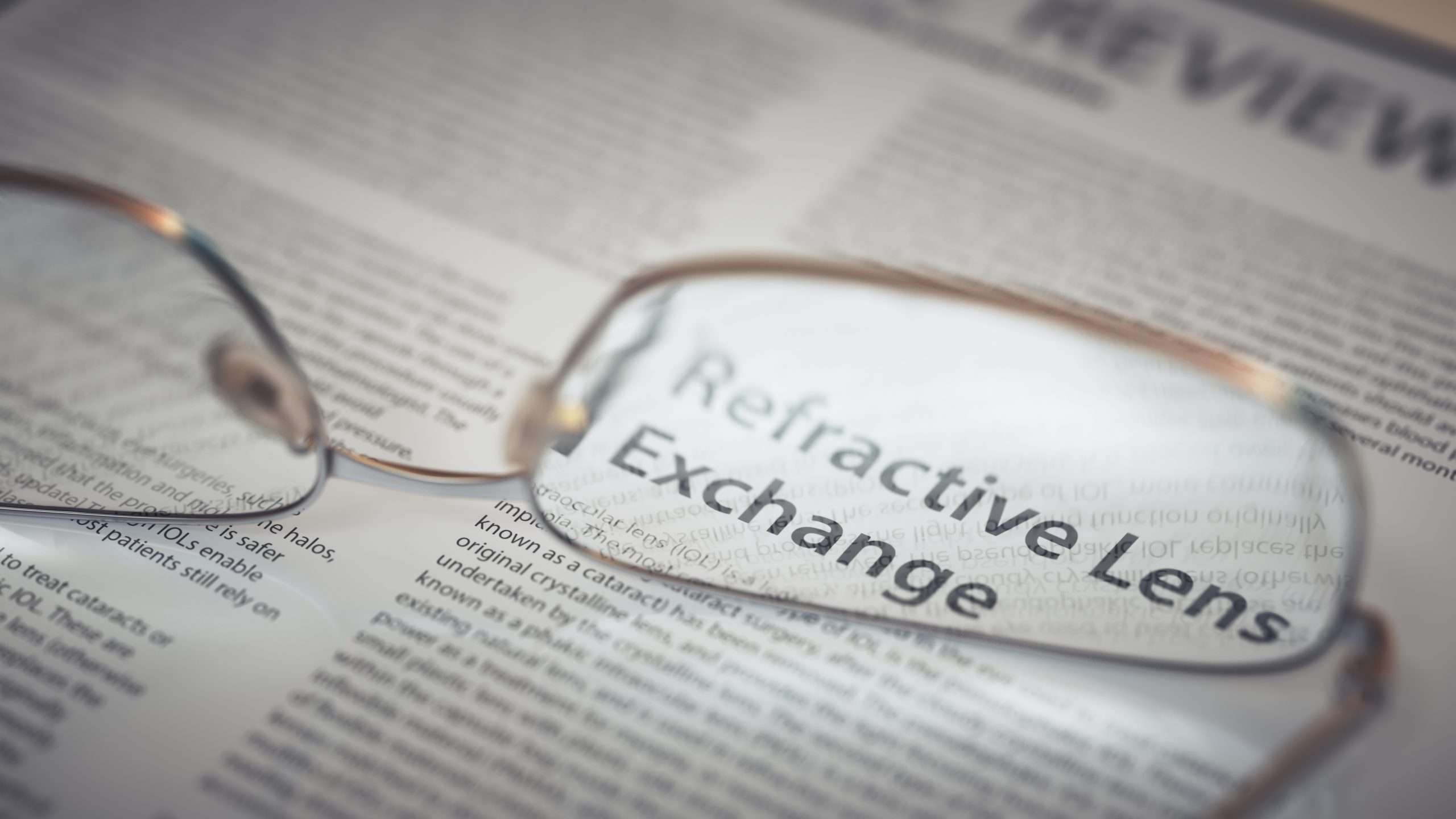
Readers and bifocals may feel like lifesavers, but they can quickly become a hassle. Whether you’re hunting down a pair of readers or adjusting to those frustrating, blurry transitions, they add unnecessary complexity to your life. With RLE, you can regain clear vision for all distances, whether reading a menu, texting your friends, or driving at night—no more switching between multiple pairs of glasses or straining your eyes to see.
How RLE Works at BoozmanHof
Our experienced doctors at BoozmanHof use the latest technology to make RLE quick, safe, and effective. The customized procedure is similar to cataract surgery, but it’s designed specifically for those who want to get out of readers or bifocals – even if cataracts aren’t an issue (yet!). The process is simple, and most patients can return to their regular activities the next day.

Dr. Michael Waggoner
Dr. Waggoner is board certified by the American Board of Ophthalmology and specializes in cataracts, vision correction, and corneal surgery. Over the course of his career, he has performed thousands of cataract and vision correction procedures. He is northwest Arkansas’ only fellowship trained vision correction and corneal surgeon.
Dr. Waggoner is an alumnus of Rogers High School and the University of Arkansas. He completed his medical education at the University of North Texas-TCOM, his residency in ophthalmology at the University of Missouri and a subspecialty fellowship in Cataracts, Refractive Surgery, and Corneal Disease at the Dean McGee Eye Institute.
Affordability

We strive to make Life Changing RLE as affordable as possible on any budget. At BoozmanHof, we believe that financing Vision Correction Surgery should be simple. That’s why we offer affordable 0% payment plans on all of our procedures.
- REFRACTIVE LENS EXCHANGE FAQ's -
Is RLE surgery painful?
No, Refractive Lens Exchange surgery is typically painless. Patients receive local anesthesia before the procedure to minimize any discomfort. While some may experience brief discomfort as the anesthesia wears off, slight discomfort or itching around the eye in the days following the surgery usually subsides quickly. Over-the-counter medications are generally sufficient to manage any discomfort.
How long is the recovery for RLE surgery?
Recovery varies for each patient, but most notice improved vision shortly after surgery. The initial healing process typically lasts about a week, during which most daily activities can be resumed. While patients may experience dilated pupils causing temporary visual blur, significant improvements in distance vision should occur within 24 hours. Reading vision may take three to five days to sharpen, especially with a multifocal intraocular lens (IOL). Patients should expect some halos around lights during the first few months of healing.
When should I have a follow-up appointment?
A follow-up visit is generally scheduled about a week after the surgery to assess healing and confirm that vision correction is on track. A final appointment one month later ensures that vision has stabilized and that prescribed eye-drop therapy is completed. If both eyes are treated, the procedures will follow a similar timeline.
Why can’t I have LASIK?
LASIK is not suitable for everyone. While it effectively corrects distance vision and astigmatism, it cannot eliminate the need for reading glasses or bifocals. In contrast, Refractive Lens Exchange can address nearsightedness, farsightedness, and astigmatism in one procedure, potentially eliminating the need for all types of glasses. Additionally, patients will not develop cataracts after the procedure.
Does insurance cover my Refractive Lens Exchange procedure?
As Refractive Lens Exchange is considered an elective procedure, most insurance companies do not cover the costs.
Will I still need to wear reading glasses, bifocals, or glasses after surgery?
At our practice, we aim for our patients to achieve glasses-free vision. Most patients who undergo Refractive Lens Exchange can expect to perform daily activities without the need for glasses.
Ready to Break Free from Glasses?
We make the journey to clear, hassle-free vision easy, affordable, and enjoyable. Imagine a life where you don’t need to dig through your bag for readers or squint through bifocals. It’s time to reclaim your vision – and your freedom – with Refractive Lens Exchange.